

How To Rebuild Credit After Bankruptcy
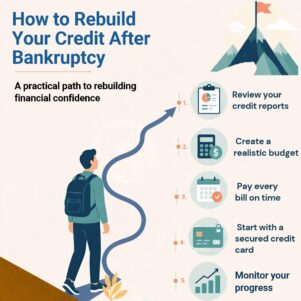
Rebuilding credit after bankruptcy is possible, but it is usually a gradual process shaped by the details of your credit file and the habits you can maintain. If you are asking how to rebuild credit after bankruptcy, begin with accurate records, a workable monthly budget, and payments you can make on time. You do not need to open several accounts or take on costly debt to get started.
Review debt and bankruptcy options
What should you do first after bankruptcy?
Start by gathering the paperwork that explains the outcome of your case. Keep the discharge order or, for a completed Chapter 13 case, the documents showing completion. Also collect recent credit reports, account statements, and any notices about debts that were not part of the case. These records help you compare what a creditor or reporting company says with what actually happened.
Make a simple inventory of accounts and obligations. For each one, note the creditor, account type, current status, amount claimed, next due date if applicable, and whether it was included in the bankruptcy. Do not assume every obligation was treated the same way. If an account is unfamiliar or its status is unclear, flag it for follow-up instead of paying or disputing it based on a guess.
A bankruptcy case and credit reporting are related, but they are not the same process. The case documents describe the legal outcome; a credit report summarizes information furnished about accounts and public records. A plain-language overview of what bankruptcy means can help orient you to common terms. For an overview of Chapter 7 bankruptcy and its process, review the case-specific details with a qualified professional when needed.
How do you review credit reports for accuracy?
Read each report carefully rather than looking only for a score. Check your name and identifying details, the bankruptcy entry, account ownership, balances, payment status, and dates. An error on one report may not appear on another, so review reports from each nationwide reporting company. Use the federally authorized source, AnnualCreditReport.com, to request reports; for rebuilding ideas, see this consumer guide to rebuilding credit after bankruptcy. That organization also describes common rebuilding steps such as using secured credit cautiously.
Look for specific, verifiable problems. Examples include a debt shown as currently owed when your case documents indicate it was discharged, an account that belongs to someone else, a balance that does not match the account history, or the same debt appearing twice. Reporting details can depend on the account and the case outcome, so do not assume an entry is wrong simply because it is negative or remains visible.
How should you dispute an error?
Write down the exact item, what you believe is incorrect, and why. Gather relevant supporting records, such as a discharge order, account statement, or correspondence. Send a dispute to the reporting company and, when appropriate, the company that supplied the information. Follow the instructions on the report or the company’s official dispute channel. Keep copies of what you sent, the date, and any response.
A clear, narrow dispute is easier to follow than a general request to remove everything connected to bankruptcy. For example, identify the account and the balance or status you believe is inaccurate, then attach the document that supports your position. If an investigation does not resolve a factual issue, review the response and consider asking a qualified consumer-law professional what options may apply. Do not pay a repair company that promises to erase accurate information or guarantee a score outcome.
How can you build a payment routine you can keep?
A steady payment routine is a more useful foundation than trying to predict how many points a particular action might add. Start with a calendar that lists each bill’s due date, minimum amount, payment method, and the account from which it will be paid. Include housing, utilities, insurance, transportation, and any ongoing obligations, not just accounts that may appear on a credit report. This helps you see whether several bills cluster around the same week.
Choose reminders that fit your actual cash flow. Calendar alerts can work well if income arrives on a variable schedule. Automatic payments may reduce the risk of forgetting, but only use them when you can monitor the linked account and maintain enough funds. A debit that triggers an overdraft can create a new problem. If automatic payment is not safe for your budget, set two reminders: one several days before the due date and another on the due date.
When a bill is not affordable, contact the provider early and ask what arrangements may be available. Explain what you can realistically pay and when. Do not agree to a schedule that leaves too little for essentials. A written monthly plan can show which payments are fixed, which vary, and where you need to make a decision before a due date. For ways to create room in a budget, see these practical ideas for growing savings; a small cushion can help prevent an unexpected expense from disrupting the next month’s bills.
Try a one-month payment map
Suppose rent is due on the first, utilities on the tenth, and a new card payment on the twenty-fifth, while income arrives twice a month. Put each due date next to the expected deposit that will cover it. If the timing does not work, ask whether the provider can change a due date or set a different arrangement. The goal is not a perfect spreadsheet. It is to make shortfalls visible early enough to respond.
Review the map once a week for a few minutes. Mark bills paid, verify that scheduled debits cleared, and update balances when a major expense changes the plan. If you share household expenses, agree on who is responsible for each payment and how you will confirm it was made. Simple accountability can prevent duplicate payments or the assumption that someone else handled a bill.
Should you open a new account after bankruptcy?
New credit is optional. A secured card or credit-builder loan may help some people establish a record of account payments, but each product comes with terms, costs, and obligations. First decide whether you can afford the deposit or payment without borrowing for essentials. Then confirm how the account is reported, how fees work, and what happens if you close it or miss a payment.
Compare products by their full cost, not by an advertised approval message. A secured card commonly requires a deposit, and the deposit may affect the credit limit. Review any annual or monthly fee, interest rate, late fee, deposit refund rules, and whether the issuer reports to the credit reporting companies. For a credit-builder loan, ask about the total amount paid, fees, how the funds are held or released, and what happens if a payment is late. Terms differ, so there is no one product that is right for every person.
| Possible step | What to check first | Potential concern |
|---|---|---|
| Use a secured card | Deposit, fees, reporting, interest, and refund terms | A fee or unpaid balance can strain a limited budget |
| Consider a credit-builder loan | Total cost, payment schedule, and how funds are handled | It adds a required payment even if income changes |
| Keep existing obligations current | Which accounts remain active and what is due | Unclear account status can lead to missed or duplicate payments |
| Wait before applying | Whether a new account is needed at all | You may postpone access to credit, while avoiding a new expense |
| Review reports and correct errors | Specific facts and documents supporting a correction | Accurate negative information may remain; disputes take follow-up |
If you choose a card, plan its use before making a purchase. One modest recurring expense that is already in your budget can be easier to manage than using the card for everyday spending without a limit. Pay the statement balance in full when you can. Carrying a balance is not required to show responsible use, and interest charges make purchases more expensive. If you are concerned about overspending, a debit card or cash budget may be a better fit for daily expenses.
Apply selectively. Several applications in a short period can create avoidable inquiries and make it harder to track new terms. An offer that says “preapproved” or “guaranteed” does not remove the need to read the agreement. Do not treat a larger credit limit as extra income. The purpose of a credit account, if you use one, is to manage a payment you can already afford.
How should you manage balances and everyday spending?
Keep credit use within a limit you can repay. If a revolving account is available, using most of its limit may affect how lenders view the file, but a particular balance or utilization percentage does not guarantee a score result. Utilization is the balance compared with available revolving credit. It is not the same as debt-to-income ratio, which compares monthly debt payments with income, and neither measure is a substitute for reviewing your complete finances.
Build a spending plan around essential expenses first. Set aside money for housing, food, utilities, transportation, healthcare, and insurance before deciding whether there is room for an optional credit payment. Keep some flexibility for irregular costs, such as vehicle repairs or school expenses. If there is no safe room for a new account payment, waiting is a sound decision, not a failure to rebuild.
For some people, the useful credit-building action is to avoid returning to costly card debt. Review ways to avoid credit card debt and questions to ask before getting a first credit card. If you already have several balances or are trying to prioritize payments, this guide to approaches to paying off debt can help you frame the choices. The right approach depends on which obligations remain, their costs, and what your budget can sustain.
How does follow-up differ after Chapter 7 and Chapter 13?
The chapter and the outcome of your case determine what records to keep and what questions to ask. After Chapter 7, compare account reporting with the discharge and schedules from your case. After Chapter 13, keep the plan and completion documents and confirm the status of accounts based on the actual result. Do not assume the same checklist applies to every account or that a case type alone answers whether an individual obligation remains.
For Chapter 13 background and common process terms, see the overview of Chapter 13 bankruptcy. Use your own case documents when checking a specific debt. If a creditor contacts you about an obligation you believe was handled in the case, record the date and details, gather the relevant paperwork, and seek qualified advice rather than ignoring it or making a promise you cannot keep.
Some readers are not yet rebuilding after a completed case; they may be comparing bankruptcy with another way to address substantial unsecured debt. These are different paths, and the consequences depend on individual circumstances. Read this overview of bankruptcy and debt settlement for general comparison, then discuss your own legal and financial situation with an appropriate professional. The aim here is not to suggest that one option is right for everyone, but to help you separate post-case credit habits from the earlier decision about how to address debt.
How long can rebuilding take?
There is no universal timetable for a credit file to change or for a lender to approve an application. The information in your reports, the reporting practices of account providers, your payment record, and each lender’s evaluation all matter. Bankruptcy may remain part of a credit history for a period set by applicable reporting rules, while other account details have their own reporting timelines. Avoid relying on a promised score increase or a specific date when making a major financial decision.
Instead, track actions you control. Once a month, confirm bills were paid as planned, check balances, and note any report corrections or unresolved questions. Every few months, review reports again and compare them with your records. A written log can show progress that a score alone may not capture, such as a corrected balance, fewer missed payments, or a budget that now has room for an emergency expense.
Try not to check scores repeatedly in response to every small change. Different services may display different scores, and a score is only one part of a lender’s decision. If you plan to rent, finance a car, or apply for a mortgage, ask what information the decision-maker will review and leave time to address report errors. Do not open an account solely to meet an imagined deadline.
What common choices can slow progress?
- Taking on payments that crowd out essentials. A new account is not worth missing rent, utilities, or another necessary bill.
- Applying for several products at once. Compare costs and reporting first, then apply only if there is a clear reason.
- Carrying a card balance to “build credit.” Interest adds cost; paying on time does not require keeping debt on the card.
- Ignoring paperwork or notices. Set aside a regular time to review statements, reports, and case documents.
- Paying for a guaranteed repair. Be cautious of a promise to erase accurate information or guarantee a score.
- Confusing a discharged account with every debt you owe. Verify the status of each obligation against your own case documents.
If debt remains difficult to manage, rebuilding a credit file does not require you to ignore the broader financial picture. Identify which balances and payments remain, whether they are current or disputed, and what amount your household can afford. This overview of unsecured debt can help clarify common account types. If you are weighing multiple possible paths, compare them carefully and ask qualified advisers questions specific to your situation.
Frequently asked questions
Can I get a credit card after bankruptcy?
Some lenders may offer secured or other cards, but approval, fees, and terms vary. Check the deposit, interest, reporting practices, and payment requirements. Apply only when an account fits your budget and you can avoid relying on it for essentials.
Do I need to carry a balance to rebuild credit?
No. Carrying a balance can lead to interest charges and is not required to demonstrate that you make payments as agreed. If you use a card, keep spending within your budget and pay the statement balance in full when possible.
Should I dispute the bankruptcy entry on my report?
Dispute information only when you have a genuine reason to believe it is inaccurate or incomplete. An accurate entry is not an error merely because it has a negative effect. Identify the specific issue and provide documents that support the correction you request.
Can a company remove accurate bankruptcy information?
A company should not promise to erase accurate information simply because you pay a fee. You can challenge factual errors, but accurate information may remain for the period allowed by applicable reporting rules. Be wary of guarantees about removal or a particular score.
What if I still have substantial unsecured debt?
First establish which obligations remain and whether each is current, disputed, or subject to another arrangement. The right next question depends on your documents, budget, and goals. Compare options without assuming any one approach guarantees a particular credit or debt outcome.
Compare debt and bankruptcy options
A careful next step
Choose one manageable action for this week: gather your case documents, request and review your reports, or set up a payment calendar that reflects your real income and expenses. Revisit the plan regularly, correct factual errors with supporting records, and consider new credit only when its cost and payment fit your household budget.
