

What Is Chapter 13 Bankruptcy?
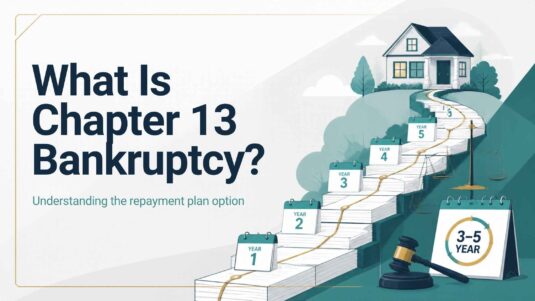
Chapter 13 bankruptcy is a court-supervised repayment plan for an individual with regular income. You propose to pay all or part of your debts over three to five years, usually through a trustee. You can often keep property while you do it. It is not a quick wipe of the balance, and it is not the right fit for every household.
People search this topic when minimum payments no longer work and they want to know whether a court plan can protect a home or a car. This guide explains how the plan works, who can file, and what it does not promise. It is educational, not legal advice. A bankruptcy attorney can tell you how the rules apply to your case.
What Is Chapter 13 Bankruptcy?
U.S. Courts describe chapter 13 bankruptcy as a wage earner’s plan in their Chapter 13 bankruptcy basics. An individual with regular income files a plan to repay creditors in installments. The plan usually lasts three to five years, and it cannot run longer than five years.
If your current monthly income is below your state’s median, the plan is generally three years unless the court approves a longer period for cause. If your income is above the state median, the plan is generally five years. Those rules come from the Bankruptcy Code, not from a company’s policy.
During the plan, creditors generally cannot start or continue collection efforts. You make the plan payment to a Chapter 13 trustee. The trustee sends money to creditors. You are not supposed to negotiate each account on your own while the case is open.
That structure is why people compare it with other paths. What bankruptcy is, in plain language, is a federal court process with more than one chapter. Chapter 13 is the repayment chapter. It is different from a liquidation case, and it is different from a private settlement program.
A plan can pay some debts in full and others only in part. Priority debts, such as certain recent taxes and domestic support, usually have to be paid through the plan. Many unsecured debts may receive only what your disposable income allows. The court decides whether the plan meets the legal tests. A website cannot estimate your payment from a headline.
Who Can Use a Chapter 13 Repayment Plan?
Chapter 13 is for individuals, including people who are self-employed or run a one-person business. Corporations and partnerships cannot file it. Spouses may file a joint case. Stockbrokers and commodity brokers are excluded.
You also need income that is stable and regular enough to fund the plan. Wages count. So can self-employment income, unemployment compensation, Social Security, and some support payments, if the court finds the income reliable. Having a job is not the only path, but a plan with no realistic payment usually fails.
Debt ceilings matter. For cases filed on or after April 1, 2025, the IRS Internal Revenue Manual states that noncontingent. Liquidated unsecured debts must total less than $526,700, and noncontingent, liquidated secured debts must total less than $1,580,125. Those ceilings cover all qualifying debts, not only tax debt, and they adjust over time. Confirm the figure in effect on your filing date.
The IRS also says you must have filed required tax returns for tax periods ending within four years of the bankruptcy filing. If overdue federal taxes are part of the problem. The IRS notes that you may need to raise withholding or estimated payments so new tax debt does not pile up during the case.
A recent dismissal can block a new filing. U.S. Courts explain a 180-day bar in two situations. One is a dismissal after you willfully failed to appear or obey the court. The other is a voluntary dismissal after a creditor asked for relief from the automatic stay. Local practice can add more hurdles. An attorney should check your history before you file.
How the Chapter 13 Plan Works
The case starts when you file a petition and the required schedules. You list assets, debts, income, and expenses. You also file a proposed plan. The automatic stay generally stops most collection, including many foreclosure and repossession efforts, as of filing. The stay is not a permanent shield, and some creditors can ask the court to lift it.
The shared court sequence, from the petition through the meeting of creditors, is covered in what happens when you file for bankruptcy. Chapter 13 adds a step that Chapter 7 does not: the court must confirm a repayment plan you can actually complete.
Before confirmation, creditors and the trustee can object. The plan has to pay certain debts on the schedule the Code requires. And it has to give unsecured creditors at least what they would receive in a Chapter 7 liquidation. Your attorney and trustee run those tests. They are not something you can settle with a calculator on a blog.
After confirmation, you make the monthly plan payment for the full term. Missed payments can lead to dismissal or conversion. You generally cannot take on new debt without permission. If your income drops, you may be able to ask the court to modify the plan. Modification is a court process, not an automatic hardship pause.
If you finish the plan, you can receive a discharge of remaining dischargeable debts. Some debts survive. Recent income taxes, many student loans, domestic support, and certain fraud debts often remain. The IRS says whether a federal tax is dischargeable depends on the facts, and you should ask a bankruptcy attorney before you count on a tax discharge.
- Gather tax returns, pay stubs, bills, and a list of secured debts such as a mortgage or car loan.
- Ask a bankruptcy attorney whether your debts fit the current ceilings and whether your income can fund a plan.
- File the petition, schedules, and proposed plan, then attend the required meetings and hearings.
- Make every plan payment and every ongoing mortgage or car payment the plan requires.
- Complete the financial course the court requires and wait for the discharge order.
What Chapter 13 Can and Cannot Protect
The main reason many homeowners look at Chapter 13 is the house. U.S. Courts say a filing can stop a foreclosure and may let you catch up missed mortgage payments over the plan. You must still pay the mortgage payments that come due during the plan, on time. A plan does not erase a home loan, and it does not let you skip the new monthly payment.
You may be able to reschedule some secured debts other than a mortgage on your primary home, and stretch them over the plan. That can lower a payment. It does not mean every car loan or second lien gets rewritten. The treatment depends on the lien, the value, and local rules.
Chapter 13 also has a consumer-debt rule that can protect a co-signer while you pay that debt through the plan. The protection is limited. It is not a promise that a family member’s credit is untouched, and it does not cover every kind of joint debt.
Property you want to keep has to be paid for inside the rules. If the plan is not confirmed, or if you stop paying, a creditor can return to court. For a closer look at home and other secured debts, read debt relief options for homeowners.
Unsecured debts such as credit cards and medical bills are often paid only in part. The unpaid dischargeable balance can be wiped at the end. That result is a court discharge, not a settlement letter. It also creates a public bankruptcy record that credit reports can show for years.
How Chapter 13 Compares With Other Options
Chapter 13 is one choice among several. A short contrast helps you see the shape of each path. A full Chapter 7 versus Chapter 13 decision guide is a separate question, because eligibility, exemptions, and the means test need their own explanation.
| Question | Chapter 13 plan | Chapter 7 case | Debt settlement |
|---|---|---|---|
| What it is. | A 3- to 5-year court repayment plan. | A court liquidation that may discharge many unsecured debts sooner. | A private negotiation to resolve enrolled unsecured debts for less than the balance. |
| Who it may fit. | An individual with regular income under the debt ceilings. | A person who qualifies under the means test and exemption rules. | A person with eligible unsecured debt who can set aside funds. |
| Home and property. | Often kept if the plan and ongoing payments stay current. | Nonexempt property can be sold. Many households keep exempt property. | Does not rewrite a mortgage. Secured debts are generally outside the program. |
| Credit and records. | Public case and plan payments. A discharge is possible if you finish. | Public case. A discharge follows if the court grants one. | No bankruptcy filing. Settled accounts can still be reported. |
| What it does not do. | Does not cancel the mortgage or guarantee a low payment. | Does not let you catch up a mortgage over five years. | Does not stop a lawsuit by itself. It does not cover every debt. |
What Chapter 7 bankruptcy is is the liquidation chapter. It can discharge many unsecured debts without a multi-year plan, but only if you qualify, and nonexempt property can be at risk. People who cannot pay the Chapter 7 filing fee have a separate court process, explained in how to file Chapter 7 with no money.
Debt settlement is not a bankruptcy. New Era Debt Solutions negotiates enrolled unsecured debts. New Era is not paid a settlement fee until an account is settled and you make the first payment on that settlement. Fees are contracted as a percentage of enrolled debt, and state rules can cap what a company may charge. Published descriptions of New Era’s percentage differ by source, so ask for the figure that applies to your state before you enroll. Settlement is not available in every state, including Oregon, Iowa, and Maine.
A settlement program does not include your mortgage, and it does not use a bankruptcy trustee. Creditors do not have to agree. Stopping payments so funds can build can increase collection calls, and it can lead to a lawsuit. For how accounts may be reported after a settlement, see how debt settlement affects your credit score.
If your main need is one lower monthly payment on balances you still intend to pay in full, compare that with consolidation in debt settlement versus debt consolidation. None of these paths is automatically better. The useful question is which one you can finish.
How to Judge Whether a Plan Is Realistic
Start with income you can document, not income you hope returns. A Chapter 13 payment has to fit beside rent or a mortgage, food, utilities, insurance, and support orders. If the leftover amount cannot cover the debts the law says you must pay, the plan is not realistic.
Next, separate secured debts from unsecured ones. A house or car you want to keep still needs its ongoing payment, plus any catch-up the plan requires. Credit cards and medical bills may be treated differently. Mixing those categories is how people overestimate what a court can cut.
Then ask what failure would cost. A dismissed Chapter 13 case can put you back where you started, with months of payments already made and collection restarted. That risk is why the income test matters more than the label on the chapter.
Bring the same numbers to any non-court option. A debt analysis can show which unsecured accounts could be enrolled, what a monthly set-aside might look like, and whether settlement is even offered in your state. It cannot tell you to file bankruptcy, and it cannot replace an attorney’s review of liens, taxes, or exemptions.
Use this short list before you choose:
- You can name a stable monthly income and the bills that must be paid first.
- You know which debts are secured, and whether you intend to keep the collateral.
- You have asked a bankruptcy attorney about the current debt ceilings and your district’s plan rules.
- You have compared the court plan with a non-court option using your actual balances, not a national average.
See whether a free debt analysis fits your accounts
Frequently Asked Questions
What does a Chapter 13 bankruptcy do for you?
It lets an individual with regular income repay all or part of their debts under a court plan that lasts three to five years. Collection generally pauses while the plan is in place, and a discharge of remaining dischargeable debt is possible if you complete it.
What will I lose if I file Chapter 13?
You take on a long payment plan, court oversight, and a public record. You can often keep property if you stay current, but missed plan payments or missed mortgage payments can put that property at risk. Some debts are not discharged.
How much is a Chapter 13 monthly payment?
There is no standard payment. It depends on your income, allowed expenses, the debts that must be paid in full, and what unsecured creditors would receive in a Chapter 7 case. Only a plan drafted for your numbers can answer it.
Is Chapter 13 better than Chapter 7?
Neither is better for everyone. Chapter 13 is built for people who have regular income and a reason to repay over time, such as catching up a mortgage. Chapter 7 is a different chapter with its own eligibility test. Ask a bankruptcy attorney which chapter you can use.
Does Chapter 13 stop calls from collectors?
The automatic stay generally stops most collection while the case is active. It is not a reason to ignore a lawsuit or a court notice you already received. If a collector is calling about unsecured debt and you are not ready to file, you can also review your account options before you choose a legal path.
Talk Through the Numbers Before You File
Chapter 13 bankruptcy can protect a house and organize debts, but only if the plan payment is one you can make for years. If you are not sure a court plan is the next step, start with the unsecured debts you can document.
New Era Debt Solutions offers a free debt analysis for people weighing their options. You can contact New Era or request the analysis online. You will get a clearer picture of your accounts. You will still want a bankruptcy attorney before you file anything in court.
Disclaimer: The information in this article is provided for general educational purposes only and is not legal, tax, or financial advice. New Era Debt Solutions is not a law firm, and our staff are not attorneys or tax attorneys. Reading this article does not create an attorney-client relationship. Bankruptcy laws, eligibility rules, and tax consequences vary by individual circumstances and by state, and they can change over time. Before making any decision about Chapter 13 bankruptcy or any other debt option, consult a qualified bankruptcy attorney and a tax professional about your specific situation.
