

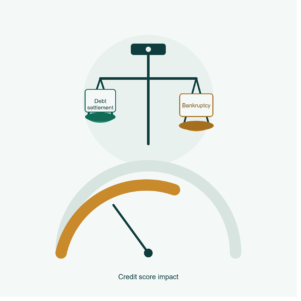
Is Debt Settlement as Bad as a Bankruptcy for Your Credit Score? The short answer is no — the two options impact your credit very differently.
“It’s important to note that personal hardships and circumstances vary and almost always influence this answer, but in general, Debt Settlement is often better for long-term credit recovery than bankruptcy because it offers faster score rebound, protects personal assets, and follows a predictable 24–48 month timeline.”
Bankruptcy creates a 7–10 year public record that can delay major life milestones, restrict housing and insurance options, and extend credit stigma. Settlement keeps the process private, avoids court‑mandated asset liquidation, and allows most consumers to begin rebuilding credit within months of completing the program.
Does Bankruptcy Hurt Your Credit More Than Debt Settlement?
Yes. Bankruptcy has a much longer and more severe impact on your credit score than debt settlement. A Chapter 7 bankruptcy can stay on your credit report for up to 10 years, and a Chapter 13 for 7 years. Lenders often view bankruptcy as a complete inability to repay debts.
What’s the Bottom Line for Your Credit Score?
If you’re comparing the two, the real question becomes: Which option helps you move forward faster? For many households, debt settlement — even with a temporary credit drop — is far less disruptive than carrying a bankruptcy for nearly a decade.
How Does Debt Settlement Affect Your Credit Score?
Debt settlement does affect your credit, but the impact is shorter and easier to recover from. During the process, accounts typically become delinquent, and settled debts are marked as “settled for less than the full balance.” Most people begin rebuilding credit within months of completing their settlements.
Do I have to disclose bankruptcy for the rest of my life?
In many situations, yes. Even after a bankruptcy falls off your credit report, many applications — including certain loans, professional licenses, security clearances, and financial disclosures — still ask whether you have ever filed for bankruptcy. You must answer truthfully, even decades later.
Does debt settlement allow me to pay something instead of walking away completely?
Yes. Many people feel a moral or ethical obligation to repay at least part of what they owe. Debt settlement supports that by negotiating a reduced amount that both you and the creditor agree to. Bankruptcy, on the other hand, may discharge debts entirely, leaving creditors with nothing.
How does debt settlement appear on my credit report compared to bankruptcy?
Debt settlement typically shows that you and the creditor agreed to resolve the account for less than the full balance. It does not usually list the settlement amount. Bankruptcy, however, appears as a public record and indicates that debts were discharged through court action, often meaning creditors received nothing.
Does my credit score start improving as I settle each account?
Often, yes. While settlement itself does not cause an immediate score increase, many people begin seeing improvement as individual accounts are settled — especially if those accounts were delinquent or in collections. Each resolved balance reduces overall debt, stops negative reporting, and creates conditions that support score recovery throughout the program.
Can I still file bankruptcy later if I choose debt settlement now?
Yes. Completing or participating in a debt settlement program does not prevent you from filing bankruptcy later if you qualify. Bankruptcy laws restrict how often you can file — typically every 8 years for Chapter 7 — but choosing debt settlement does not block your ability to file in the future. Bankruptcy remains an option if your circumstances change.
